Customer communication in India is moving beyond sending a message and waiting for a delivery report. Customers increasingly expect businesses to recognise the context of an interaction, provide relevant information and let them complete the next step without switching between multiple channels.
A payment confirmation, an order update, a service reminder and a support request may begin on different channels. But from the customer's perspective, they are all part of one relationship with the business.
This is the shift behind the changing customer conversation: communication is becoming more connected, interactive and increasingly automated. For Indian compliance and operations teams, the challenge is making that experience reliable without losing control over consent, deliverability and regulatory requirements.
From one-way messages to connected conversations#
Traditional business messaging was largely built around outbound communication. A business sent an SMS, made a voice call or triggered a notification, and the customer received information.
That model still has an important role. Transaction alerts, OTPs, appointment reminders and delivery notifications often work best when they are short, direct and easy to understand.
However, many customer interactions need more than a notification. A customer receiving a delivery update may want to change the delivery slot. Someone receiving a payment reminder may want to complete a payment. A customer with a service complaint may need to share additional information.
This creates a need for communication that supports a complete interaction rather than just the initial message.
Consider an e-commerce business:
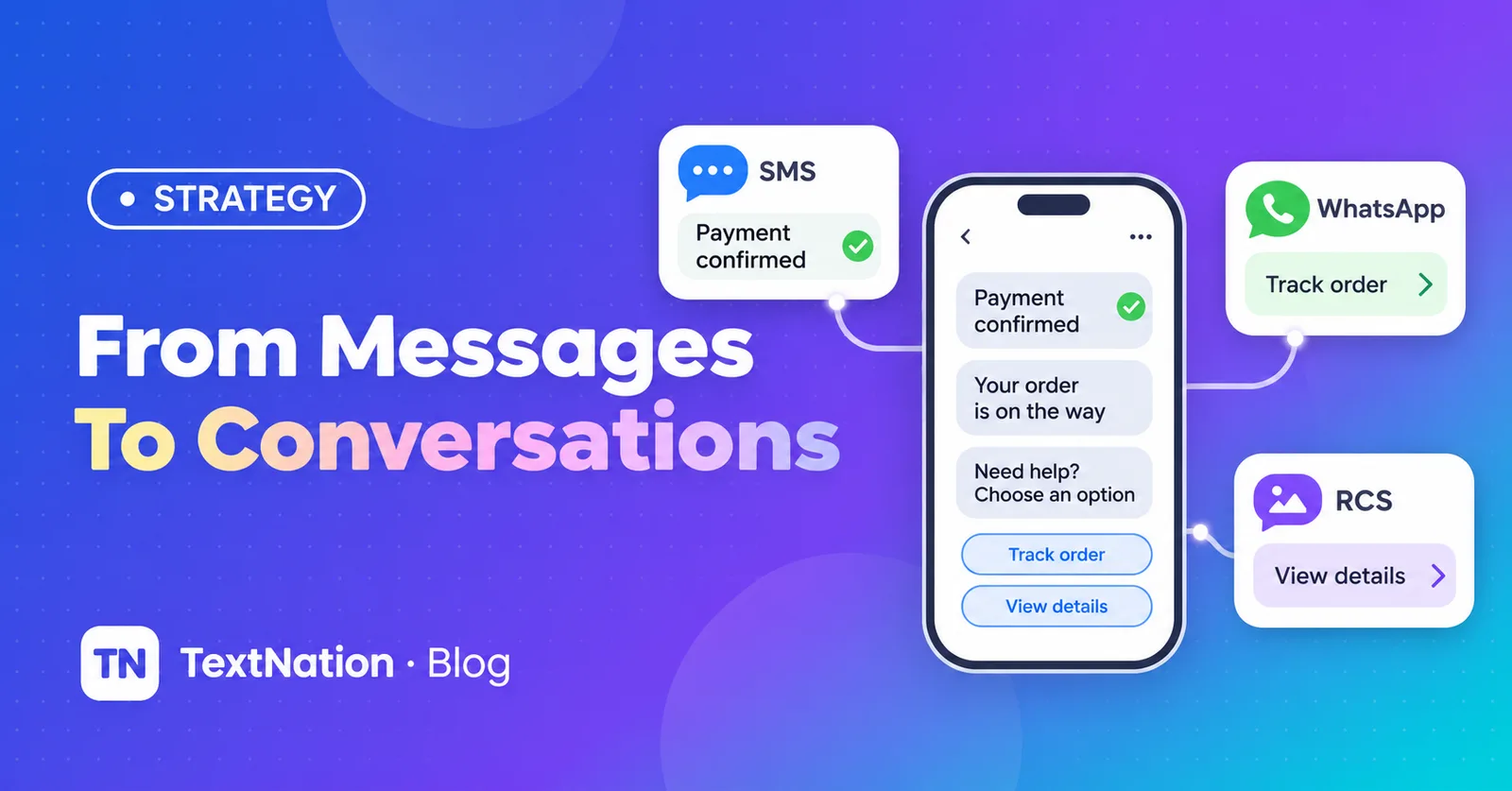
- SMS confirms that an order has been placed.
- WhatsApp provides an order update and tracking information.
- RCS presents a richer notification with relevant action buttons where supported.
- Voice supports situations where a customer needs assistance or an automated call is appropriate.
The objective is not to use every available channel. It is to make the interaction easier for the customer.
Why SMS, WhatsApp, RCS and voice each matter#
A connected communication strategy does not mean replacing one channel with another. Each channel has different capabilities, reach considerations and operational requirements.
| Channel | Where it works well | Operational consideration |
|---|---|---|
| SMS | OTPs, transaction alerts and essential notifications | DLT registration, templates and consent requirements |
| Customer support, order updates and interactive workflows | Opt-in, approved templates and applicable messaging policies | |
| RCS | Branded notifications, images, carousels and action buttons | Device, operator and service availability |
| Voice | Reminders, verification and customer assistance | Calling permissions, consent and applicable telecom requirements |
SMS remains an important foundation#
SMS continues to be useful when businesses need a straightforward communication channel that does not depend on customers installing a separate messaging application.
Banks, fintech companies, healthcare providers and e-commerce businesses use SMS for transactional communication, alerts and verification workflows.
But reliable delivery requires more than integrating an SMS API. Sender registration, template approval, content consistency and the correct telemarketer chain all matter.
WhatsApp makes conversations interactive#
WhatsApp Business API is useful when a customer needs to respond, select an option, share information or continue an interaction.
For example, a healthcare provider can send an appointment reminder and let the customer confirm or request a change. An e-commerce business can provide order updates and support within the same conversation.
Businesses should distinguish between marketing, utility and authentication templates, and use the correct approved template category. They must also respect the customer's opt-in and applicable WhatsApp messaging policies.
For more detail, see WhatsApp Template Categories Explained: Marketing, Utility and Authentication.
RCS brings richer experiences to messaging#
RCS Business Messaging adds capabilities such as branded sender experiences, images, suggested replies, carousels and interactive buttons.
Instead of sending a plain-text message asking a customer to visit a website, a business may be able to present a product card or a direct action within the messaging experience.
However, RCS reach should never be assumed. Device support, operator availability and configuration influence whether a customer can receive an RCS message.
Read RCS Business Messaging in India: What It Is and When to Use It for a closer look.
Voice still has a place#
Not every interaction can be resolved through a text message.
Voice is useful for situations involving complex instructions, urgent assistance, reminders and customers who prefer speaking to an automated system or support representative.
The important distinction is between using voice as another isolated outbound channel and connecting it to the wider customer journey.
Compliance is part of the communication architecture#
A richer customer experience does not reduce regulatory responsibility. In India, compliance must be considered before a communication workflow goes live.
TRAI's Telecom Commercial Communications Customer Preference Regulations, 2018 (TCCCPR) establish the framework for managing commercial communications and preventing unsolicited messages and calls.
For commercial SMS, businesses should pay attention to the following:
1. Principal Entity registration#
A business sending commercial communication must complete the applicable Principal Entity registration with its telecom service provider.
2. Registered headers#
Commercial SMS must use the appropriate registered sender headers. Businesses should ensure that the header belongs to the correct entity and is configured for the intended communication.
3. Approved content templates#
The actual message must correspond to its registered DLT content template. Variable fields should contain only the information permitted by the approved template.
For example, a delivery notification should not become an opportunity to insert unrelated promotional content into a transactional template.
4. Consent management#
Businesses must acquire and maintain consent wherever explicit consent is required. They should also respect customer preferences, DND restrictions and applicable opt-out requirements.
TRAI's digital consent acquisition framework provides a mechanism for acquiring and recording digital consent through telecom operators' DLT platforms.
5. Traceability and accountability#
Businesses should maintain visibility into the complete message transmission chain, including their registered telemarketer relationships.
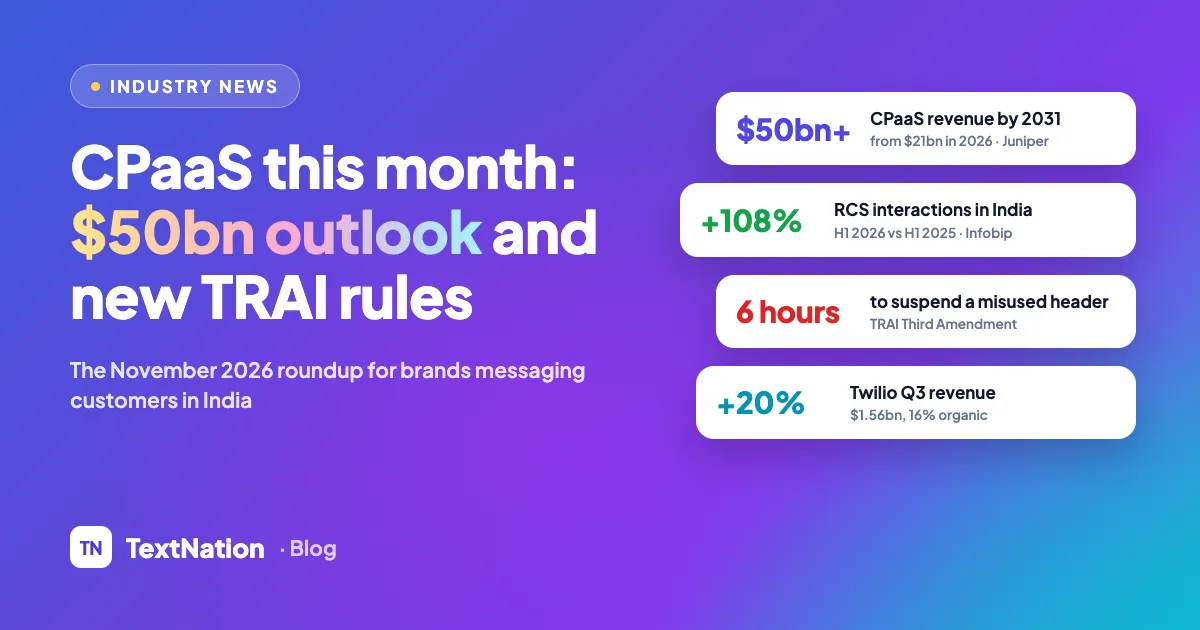
TRAI's September 2026 amendments further strengthened the regulatory framework, including provisions relating to suspected unsolicited commercial communication, sender accountability and safeguards around headers and content templates.
For the official requirements, consult TRAI's Advice to Senders and the September 2026 amendment announcement.
Deliverability needs operational ownership#
A communication platform can report that a request was accepted, but that does not necessarily mean the customer received or acted on the message.
Operations teams should distinguish between different stages of the delivery lifecycle:
- Accepted: The messaging system accepted the request.
- Submitted: The message was handed over for delivery.
- Delivered: A delivery confirmation was received, where supported.
- Failed: The delivery attempt failed or was rejected.
- Read or responded: The channel provides the relevant interaction event.
These statuses are not interchangeable. SMS, WhatsApp and RCS do not expose identical delivery and engagement signals.
A useful operational dashboard should track:
| Area | What to monitor |
|---|---|
| Delivery | Accepted, delivered and failed messages |
| Compliance | Template mismatches, rejected messages and consent status |
| Engagement | Replies, clicks and completed actions where supported |
| Reliability | API errors, latency and provider availability |
| Customer preferences | Opt-outs, complaints and communication restrictions |
Teams should also establish clear ownership for investigating failures. A delivery issue might originate from an invalid template, incorrect recipient data, operator filtering, a routing problem or temporary service unavailability.
Without failure categorisation, operations teams risk treating every delivery problem as a generic gateway issue.
For high-volume workloads, How to Deliver 10M+ Messages Daily: Infrastructure & Reliability explores the infrastructure considerations behind reliable messaging at scale.
Build customer journeys around outcomes#
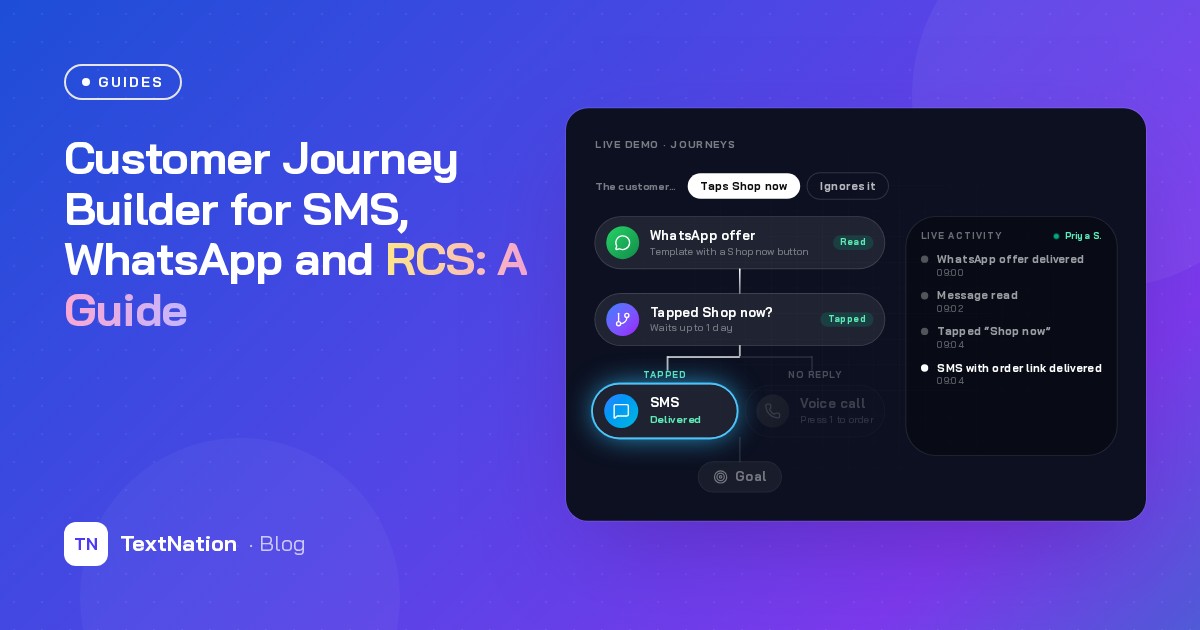
One of the most practical changes businesses can make is to stop designing communication as separate campaigns and start mapping it around customer journeys.
Take a loan application as an example:
- Application received: Send an SMS confirmation.
- Additional information required: Send a WhatsApp notification with instructions, where the customer has opted in.
- Document submission: Provide an appropriate interactive experience or secure submission link.
- Application status: Notify the customer when the application progresses.
- Human assistance: Escalate unresolved questions to a support representative.
Every step should have a defined trigger, communication purpose, channel and fallback behaviour.
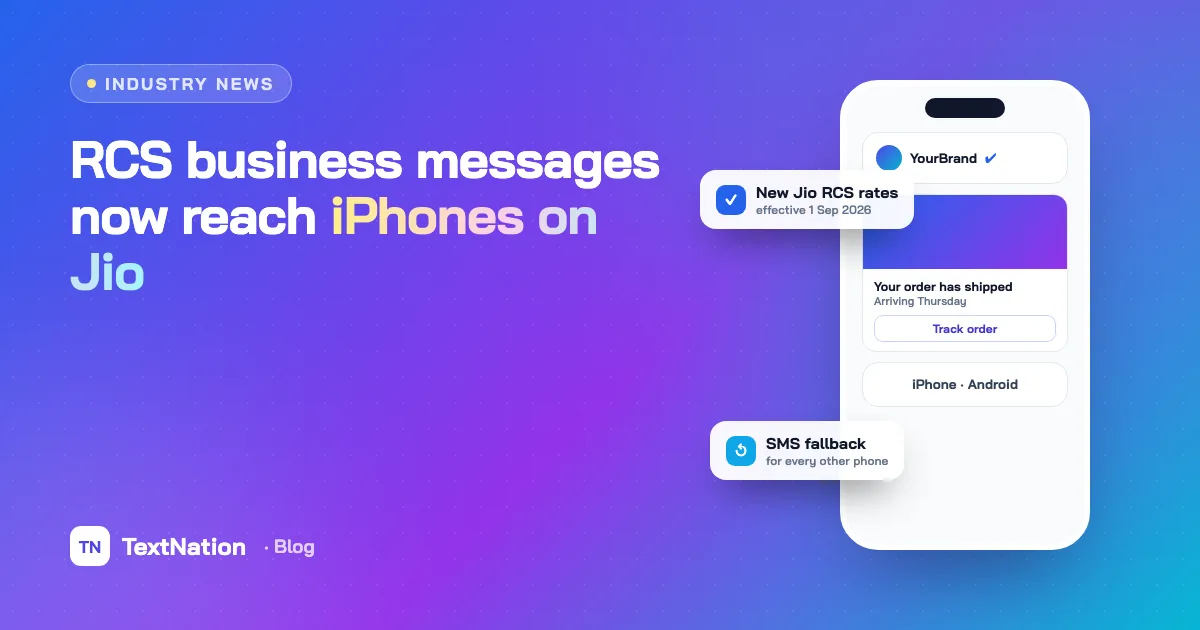
A well-designed journey should also account for customers who cannot receive a particular channel. If RCS is unavailable, for example, the business may use an appropriate alternative such as SMS, provided the communication is permitted and the content is suitable for that channel.
Avoid sending the same notification across multiple channels simultaneously without a clear reason. This can create duplicate messages, increase customer frustration and complicate complaint management.
Where AI and automation fit#
Automation can make customer communication more responsive, particularly when interactions involve repetitive questions or predictable workflows.
A customer asking about an order status, for example, should not necessarily need to wait for a support representative. An automated assistant can retrieve the relevant status, explain the next step and provide an escalation option when necessary.
Useful applications include:
- Answering frequently asked questions.
- Checking order, payment or application status.
- Managing appointment confirmations.
- Routing conversations to the appropriate support team.
- Escalating sensitive or unresolved cases to human agents.
However, automation must operate within the same compliance framework as other communication systems.
An AI-generated message does not automatically become an approved DLT template. Nor does automation remove the need for consent, opt-out handling, appropriate WhatsApp templates or secure customer-data practices.
Businesses should also maintain conversation logs, define escalation conditions and prevent automated systems from making unsupported promises or exposing sensitive information.
The objective should be to remove unnecessary effort from the customer journey, not to automate every interaction regardless of context.
A practical checklist for Indian businesses#
Before redesigning a customer communication programme, compliance and operations teams should review the following:
- Map the customer journey from the initial trigger to the final outcome.
- Select channels based on customer needs, reach and interaction requirements.
- Verify Principal Entity, header and content-template registrations for commercial SMS.
- Maintain evidence of applicable customer consent and opt-out preferences.
- Validate WhatsApp template categories and messaging permissions.
- Check RCS device and operator availability before depending on rich messaging.
- Define channel fallback rules without creating duplicate notifications.
- Monitor delivery failures, API errors and customer responses.
- Establish escalation paths for failed or unresolved interactions.
- Review automated workflows for compliance, privacy and auditability.
The most common mistake is treating channel integration as the end of the project. In practice, integration is only the beginning. The real work lies in maintaining consistent customer experiences, regulatory controls and operational visibility as communication volumes and use cases grow.
The next phase of customer communication#
The shift from broadcast messaging to connected conversations is not about abandoning SMS or adopting every new channel. It is about understanding what the customer needs at each stage and selecting the most appropriate way to deliver that experience.
For Indian businesses, this transition must be built on three foundations: reliable delivery, disciplined consent management and channel-aware customer journeys.
SMS, WhatsApp, RCS and voice will continue to serve different purposes. As automation becomes more capable, the businesses that manage these channels as one coordinated communication strategy will be better positioned to make customer interactions simpler, more transparent and easier to resolve.
The technology should remain in the background. What matters is whether the customer receives the right information, can take the next step and gets the help they need.
Frequently asked questions
What is a customer communication strategy?+
Which communication channel is best for Indian businesses?+
Is DLT registration mandatory for bulk SMS in India?+
How can businesses improve SMS delivery rates in India?+
How can businesses combine SMS, WhatsApp and RCS?+
Practical guides on SMS, WhatsApp, RCS and compliance. No spam — unsubscribe any time.

The team that designs and runs TextNation's SMS, WhatsApp, RCS and voice platform. We write about new features, compliance changes and practical ways Indian businesses can reach customers better.
Pricing, rules and new channels shift every quarter. Talk to us about what they mean for your messaging costs.